
You enter a timeline where events from the history of Polish and world railways meet on a single track. On either side of it, further stations await: pioneering journeys, documents that changed the course of history, speed records, electrifications, great bridges, and tunnels. Begin your journey through the twists and turns of history: from Liverpool–Manchester and Stockton–Darlington, through Wrocław–Oława, to the Shinkansen and the Gotthard Base Tunnel.
Timeline
1804
The beginning of the steam railway era
Richard Trevithick test-runs the first steam locomotive on a route over 15 kilometers long, which was covered in 4 hours and 5 minutes.
1825
Opening of the Stockton and Darlington Railway in England
The first passenger train set off on a 15-kilometer route, and it was led by engineer George Stephenson. It was the first public railway line.
1830
A passenger train line between Liverpool and Manchester is launching.
This is the world's first line on which trains run according to the timetable.

1837
Railway Expansion
The first railway line in the Russian Empire, measuring 27 km, was opened. In France, trains departed on the Paris – Le Pecq route, which was intended almost exclusively for passenger transport.
1842
The first train departs on the Wrocław – Oława route.
This was the first railway line within the present borders of Poland.

1844
Enactment of the Railway Regulation Act in the United Kingdom
The law introduced, among other things, cheap tickets and trains with 3rd class carriages on every route. The railway became accessible to everyone.
1845
The beginnings of the Warsaw-Vienna Railway
The first train departs in the territory of the Russian Partition on the section from Warsaw to Grodzisk Mazowiecki – a fragment of the so-called "Viennese Railway".
1863
The opening of the world's first underground railway in London
The underground city railway system was 6 kilometers long and had 7 stations.
1869
Completion of the Transcontinental Railroad
It connected the eastern and western coasts of the United States.

1870
Work begins on the highest railway in the world in Peru
This work was carried out under the direction of the Polish engineer Ernest Malinowski. The highest point of the route: 4818 m above sea level.
1872
The train connects Mumbai with Kolkata
It was a kind of revolution and the beginning of mass mobility on the Indian subcontinent.
1879
Presentation of the first electric train at the exhibition in Berlin
It was built and presented by Werner von Siemens.
1883
The first journey of the luxury „Orient Express” from Paris to Constantinople
Its permanent train number in the European timetable, 262/263, is currently carried by one of the „Baltic Express” train pairs running between Prague Hl.N. and Gdynia Główna.
1916
Completion of the world's longest railway
Official completion of the construction of the Moscow–Vladivostok railway line, measuring 9,289 km.
1918
Construction of new railway lines after regaining independence
An intense period begins with the purchase of rolling stock and the integration of railway systems inherited from the partitioning powers. Between 1918 and 1939, 1873 km of new railway lines are built.

1919
The establishment of the Fablok factory in Chrzanów
It was the first Polish company producing steam locomotives, which three years later delivered the first assembled steam locomotive.
1921
The Kutno – Strzałkowo line has been opened.
This was the first railway line in independent Poland, which shortened travel time from Warsaw to Poznań.
1926
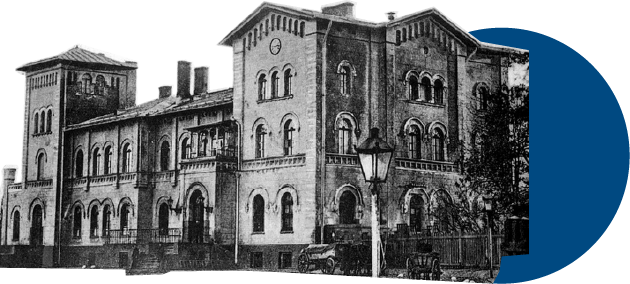
Polish State Railways are being established
By the decree of the President of the Republic of Poland, Ignacy Mościcki, of September 24, 1926, the Polish State Railways (PKP) were transformed into a commercial law entity.
1927
Launching Poland's first private electric railway line
It was a line from Warsaw to Grodzisk Mazowiecki, still operating today as the Warsaw Commuter Railway.
1933
Completion of the construction of the Coal Trunk Line connecting Upper Silesia with the port of Gdynia
It was the largest railway investment of the interwar period, spanning 450 km.
1933
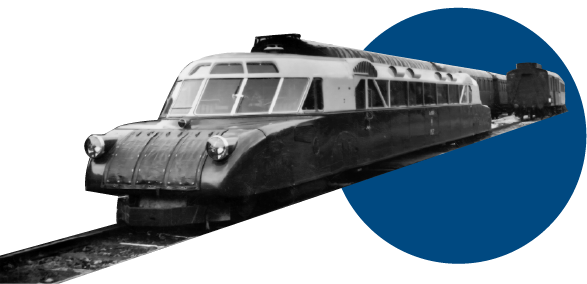
Buying your first Luxtorpeda
PKP purchased the first high-speed motor car, and then production of such vehicles began in the country. It was one of the icons of the railway and a symbol of progress.
1936
The first electrified line Otwock – Warsaw – Pruszków opened for use
From that point on, electrification of routes in the Warsaw agglomeration continued.
1937
Polish locomotive honored in Paris
The modern Polish steam locomotive Pm36 received a gold medal at the International Exhibition „Art and Technology in Modern Life” in Paris.
1939-1945
The railway during World War II
After the outbreak of the war, the railway came under the administration of the Reich and the Soviet Union. Polish railway workers, despite threats of repression, became involved in assisting the civilian population and collaborated with the resistance movement. An example of this commitment can be seen in the railway workers from Szymankowo, who stopped a Wehrmacht train, thereby helping Polish soldiers to blow up bridges in Tczew that were important to the Germans.

1945
Reconstruction of the railway after the war
PKP took over the management of the railways in the new area of the state from the Soviet military administration, and the reconstruction of war damage began.
1946
Return of electric trains on the Warsaw to Otwock route
A year later, the great electrification of Polish railways began, which lasted until the 1990s.
1961
EN57 train production
These trains became the longest-produced series railway vehicle in the world (1961-1993) and for many years were a symbol of regional and suburban railways.
1964
The world's first high-speed railway opened in Japan
Initially, Shinkansen trains ran on the Tokyo - Osaka route at a speed of 210 km/h.
1975
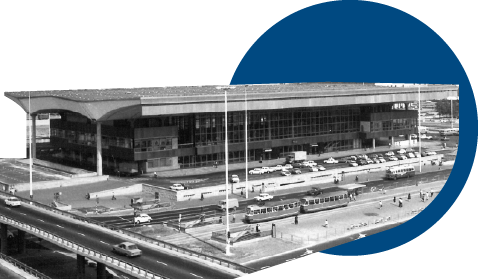
Opening of the Warsaw Central Railway Station
The largest facility of its kind in Poland, a gem of modernism, and one of Warsaw's symbols. In 2025, it celebrates its 50th birthday.
1977
Completion of the Central Railway Trunk Line
The highway connecting Silesia with Warsaw was 224 km long, and the first express trains with a speed of 160 km/h traveled on it as early as the 1980s.
1979
Opening of the Metallurgical-Sulphur Line
It was a broad-gauge line, 395 km long, and was used to improve the transport of goods to and from the USSR, including supplies for the Katowice Steelworks.
1980
Employee involvement of PKP in opposition activities
The blockade of the Lublin junction in July 1980 and the hunger strike of railway workers in Wrocław are particularly noted in history.

1981
The beginning of the high-speed rail revolution in Europe
A new Paris-Lyon line has been opened in France, with TGV trains now running at speeds of 260 km/h.
1990
Initiating the transformation of railways after the fall of the Polish People's Republic
Gradual privatizations and restructurings are beginning.
1992
First Eurocity and Intercity trains in Poland
PKP, modeled after Western European railways, launched trains composed of modern UIC-Z class carriages. They operated abroad and connected Warsaw with the largest Polish cities. This set a new standard for long-distance trains.
1994
By train from Great Britain to the continent
The approximately 50 km Eurotunnel has opened, connecting London and Paris with high-speed trains.
1995
Changes in Polish railways
A law on the state-owned enterprise PKP was adopted and the restructuring process began.
1999
Great PKP reform
The Council of Ministers adopted the PKP restructuring program, and its legal framework was enshrined in the Act of September 8, 2000, on the commercialization and restructuring of the state-owned enterprise „Polish State Railways.”.
2001
PKP Group is being created
Companies responsible for: passenger and freight transport, nationwide railway infrastructure, energy, telecommunications and IT, and other areas have been spun off. PKP is becoming a joint-stock company.
2004
Development of railways through Poland's membership in the European Union
Accession to the EU influences the development and modernization of railways in Poland and their integration with the railways of the Community states. During this time, the role of local governments in planning, organizing, and financing regional passenger transport was also increased.
2006
The world's highest conventional railway
The entire Qinghai-Tibet Railway has been completed. The highest point on the route from Beijing to Lhasa is at an altitude of 5,072 meters above sea level.
2007
Speed record in France
During test runs, a new speed record for conventional trains was set. The TGV train reached 574.8 km/h.
2010-2012
Major modernization of railway stations ahead of the European Championships
56 train stations have been modernized, including those in Wrocław, Gdynia, and Warsaw East. Warsaw Central has been renovated, and the station in Poznań has been rebuilt.
By the end of 2016 alone, over 100 railway stations had been modernized or built from scratch. Station investments are ongoing, and modern stations have become symbols of the changes in Polish railways.

2013
PKP CARGO on the stock exchange floor
A company within the PKP Group, as the first railway company in Poland, debuted on the stock exchange.
2014
Pendolino trains enter domestic routes
Fast Pendolino trains have begun operating on selected routes at a maximum scheduled speed of up to 200 km/h. This has ushered in a new quality of travel with PKP Intercity.
2014
Kraków Główny Railway Station
Poland's first train station located entirely underground has been built.
2016
Opening of the world's longest railway tunnel
Opening of the 57 km long Gotthard Base Tunnel in the Swiss Alps.
2018
Enactment of the Act on the Central Communication Port
Beyond the airport, a network of new high-speed rail lines (HSR) will also be a part of it.
2020
The COVID-19 pandemic outbreak as a barrier to railway development
The pandemic is causing a drastic drop in the number of passengers using trains in Poland and other countries around the world.
2022
The PKP Group is beginning its operations as a holding company
The new formula allows for better management of the resources and competencies of the individual companies within it.
2023
Polish hydrogen-powered locomotive
A hydrogen locomotive produced by PESA Bydgoszcz SA has become the first in Europe to be approved for operation.
2024
Record number of rail passengers in Poland
In 2024, 407.5 million passengers used train travel. The railway last recorded a better result in 1997.